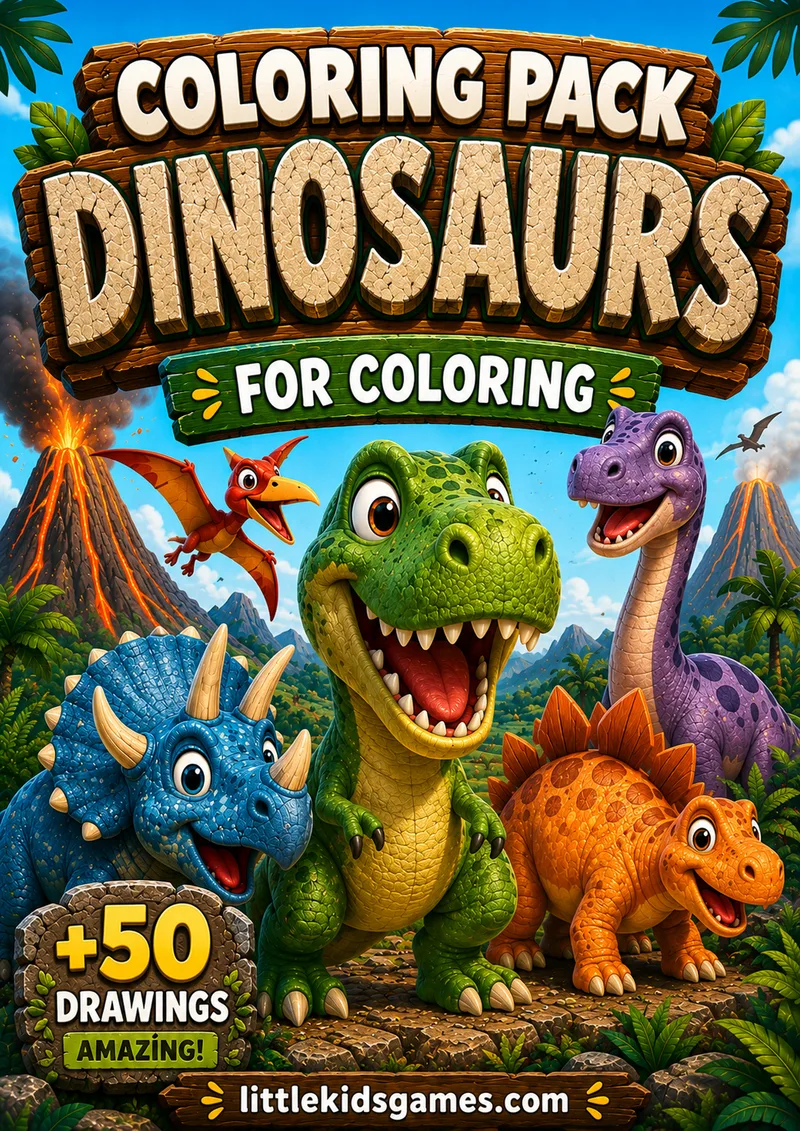
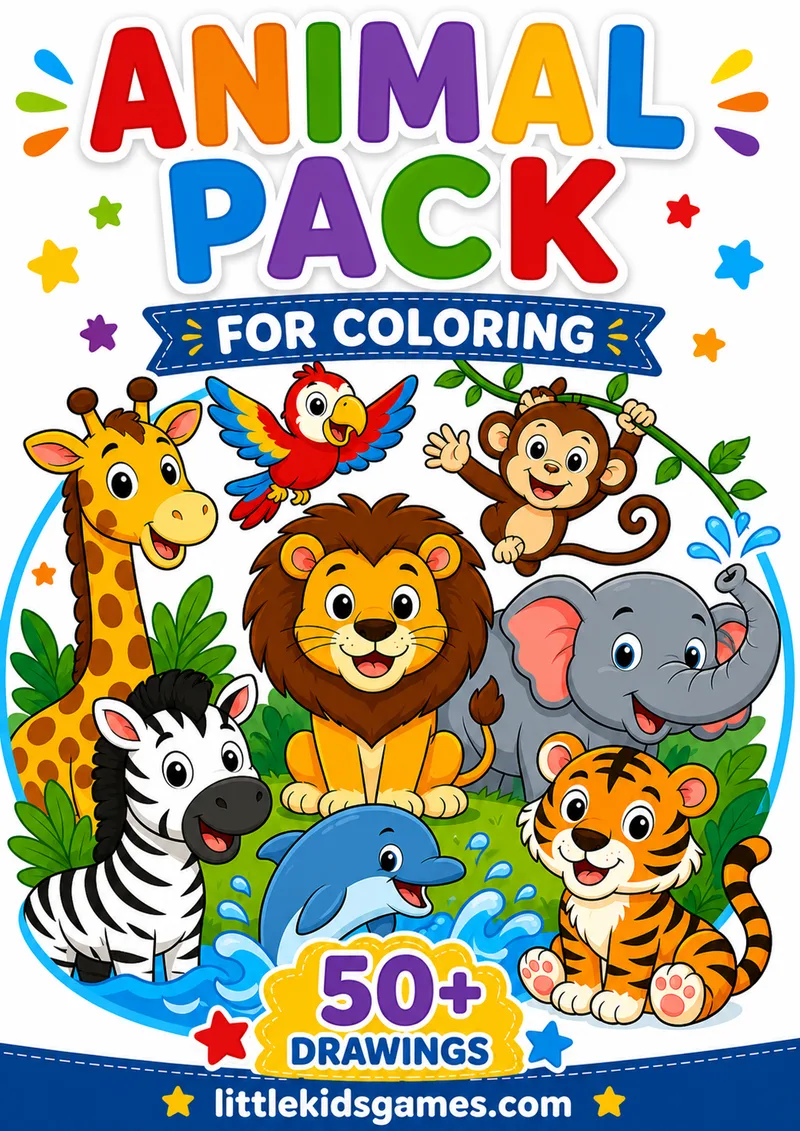
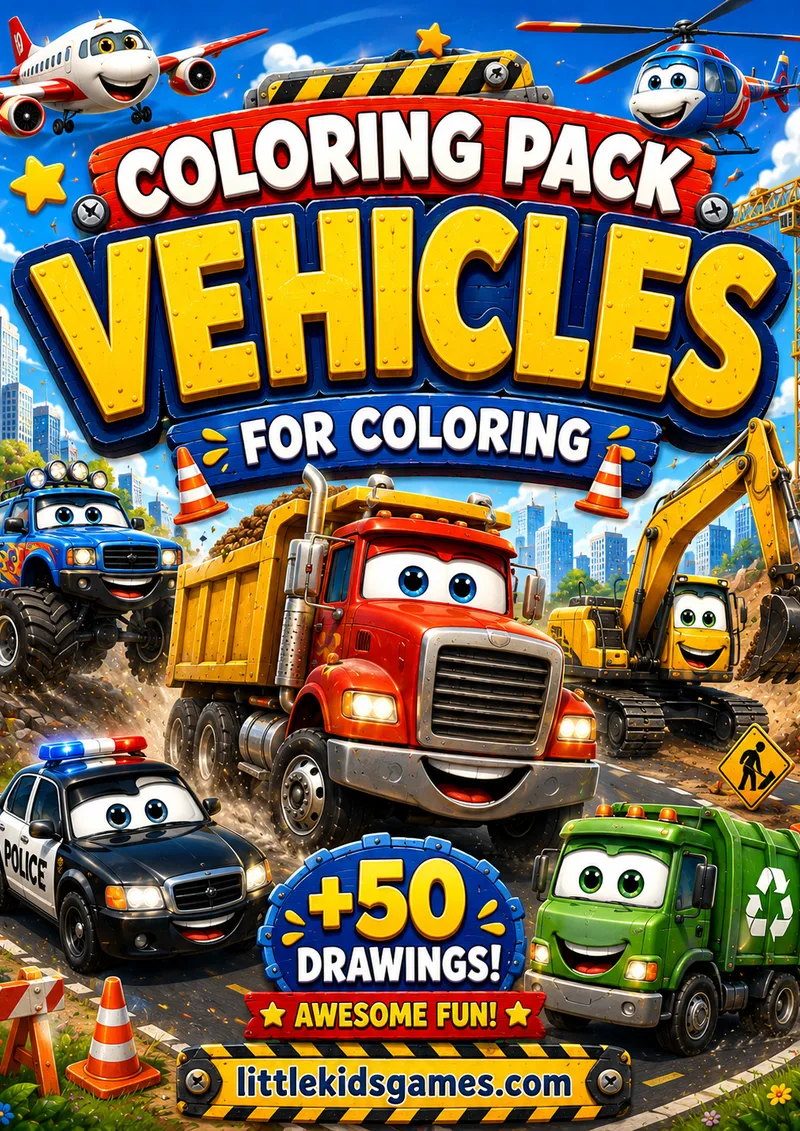
Why Coloring Is So Much More Than Filling In Shapes: Fine Motor Skills Ages 3-6
If you've ever watched a three-year-old grab a crayon in a closed fist like they're about to hammer a stake, and then seen that same kid at six writing their name with their tongue sticking out in concentration, you witnessed one of the most impressive processes in child development. And most of it happened while coloring.
A three-year-old's hand is a construction site
Adults take for granted something that's actually enormously expensive to learn: holding a pencil. It takes about twenty small muscles in the hand and wrist working together, plus the shoulder and elbow acting as a stable base, plus the eyes telling that whole crew where to go. None of it comes pre-installed.
At three, most kids grip the crayon with their whole hand — what specialists call a palmar grasp — and color by moving the entire arm from the shoulder. Don't correct it: that's exactly what's supposed to happen. Arm first, wrist next, fingers last. It's a building that goes up from the foundation, and coloring is the cheapest, most effective scaffolding there is.
By the time that same kid is five or six, the crayon will have migrated on its own toward the fingertips, into the tripod grip (thumb, index, middle finger) they'll later need for writing. Occupational therapists have been saying it for decades: kids who colored a lot show up to first grade with their hand ready. The kids who didn't will start writing with twice the effort.
What they're actually practicing while coloring that dinosaur
It might look like they're just passing the time. But here's what's happening under the hood:
Pressure control. Pressing so hard the paper tears, or so lightly nothing shows up — both extremes are normal at first. Learning to regulate how much force the hand applies is a skill in itself, the same one that will later keep pencil tips from snapping every five minutes.
Respecting a boundary. "Stay inside the lines" isn't a teacher's obsession — it's pure eye-hand coordination. The eye spots the edge, sends the alert, and the hand has to brake in time. Every time a kid stops the crayon just short of the outline, their brain has pulled off a small feat of precision.
Crossing the midline. When they color a large area and their right hand travels across to the left side of the page without switching hands, they're connecting the two hemispheres of the brain. Sounds like a technicality; it's actually a prerequisite for reading and writing.
And stamina. Hand muscles get tired like any others. Short, frequent coloring sessions are — literally — the endurance training a hand needs for the day it has to copy from the board.
What to expect at each age (without obsessing over charts)
Every child has their own pace, and textbook ages are guidelines. That said, a compass helps:
Around 3: scribbles with intent. They pick colors because they like them, not because they "match." The sky is purple and that's perfect. What matters at this age is that the experience feels good: big pictures, thick lines, zero pressure. In our online coloring section, the easy designs are built exactly for this stage — large shapes that forgive every stray mark.
4 to 5: they start caring about "making it look right." They begin respecting outlines in the big areas and get frustrated when a picture has too much detail. The classic adult mistake here is offering complex pictures too soon: frustration beats fun and the child walks away. Fewer details, more wins.
5 to 6: the tripod grip has settled in, they change stroke direction without rotating the whole page, and decisions appear: the roof will be red, the grass gets two different greens. This is the moment for more detailed printable coloring pages — simple mandalas, scenes with several elements — and for trading the chunky crayon for a thin one.
Screen or paper? Both — and it's not a diplomatic tie
We get asked this a lot, and the honest answer is they do different jobs. Paper trains pressure, real-tool handling, muscle endurance. Coloring on a screen — finger or mouse — trains something else: gesture precision, planning ("which color goes here?"), and, to be fair, it rescues moments paper can't reach: the waiting room, the long drive, grandma's house with no crayons in sight.
The combination we see working best among families who use the site: screen for discovering and choosing ("which one do you want to paint?"), paper for the long table session. The same picture colored first online and then printed doesn't get boring — quite the opposite: the child arrives at the paper with a plan already made, which is a rather sophisticated bit of planning for someone who still dips their toast in the juice.
If you want to go one step further, free drawing — no outlines, blank canvas — is the perfect complement to coloring: one trains control, the other imagination. Both feed the same hand.
Three things worth NOT doing
Don't correct the grip too early. Forcing the tripod grip at three is like asking someone to run before they can walk: the grip matures on its own as the hand gets stronger through play. If the fist grip is still going strong at five and a half, then yes — a low-key check with the pediatrician or an occupational therapist makes sense.
Don't turn it into homework. "Finish coloring the duck" is the fastest way to ensure the duck never gets colored again. A half-finished picture isn't a failure: it's a child who already got everything they needed from that session.
Don't praise only the result. "So neat!" sets the bar at neatness. "I noticed you spent ages choosing those colors" sets the bar at the process — which is where the important stuff is happening. The picture on the fridge is a souvenir; the development happened at the table.
Frequently asked questions
At what age should kids start coloring?
As soon as they can hold a crayon without eating it — usually between 18 months and 2 years. Early on it'll be closed-fist scribbles lasting two minutes, which is exactly what to expect. Chunky crayons, big sheets, patience.
My 4-year-old colors outside the lines constantly. Is that normal?
Completely. Consistently staying inside outlines arrives between 5 and 6, and even then with plenty of overflow. If the picture has large areas and they're still coloring random patches with no intent to follow the shape, try simpler designs before trying more instructions.
Does coloring on a computer or tablet count as motor practice?
It counts, but it trains partially different skills: gesture precision and eye-hand coordination, yes; strength, pressure and real-pencil handling, no. That's why alternating screen and paper beats picking a side.
Is coloring useful for kids with motor difficulties?
Coloring is actually one of the most-used activities in occupational therapy, precisely because the difficulty is so adjustable (bigger or smaller pictures, thicker or thinner crayons). If there's a diagnosis or a concern, the professional working with your child can suggest how to adapt it.