Spot the differences
✨ 🧐Pick a scene to start
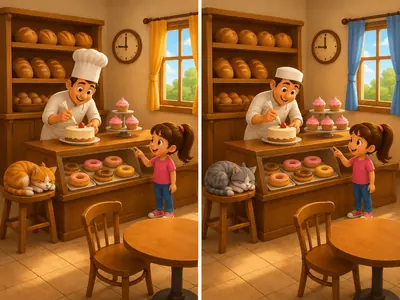 6 differences
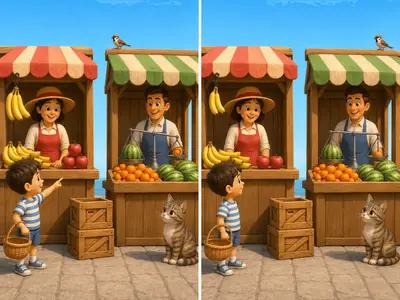 5 differences
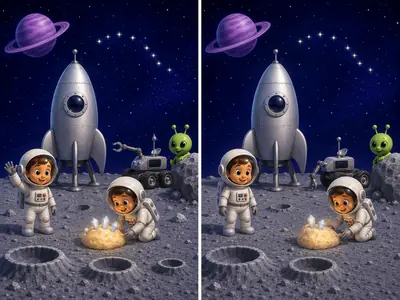 6 differences
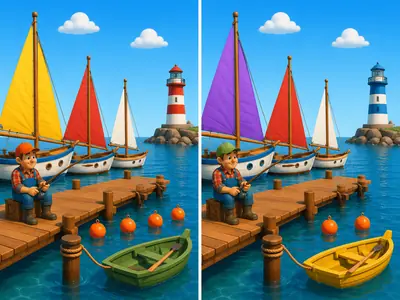 5 differences
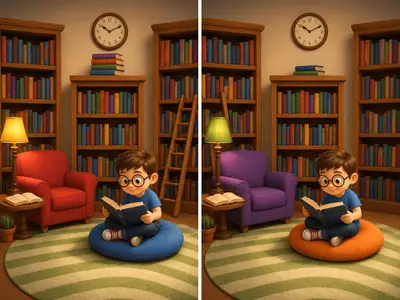 6 differences
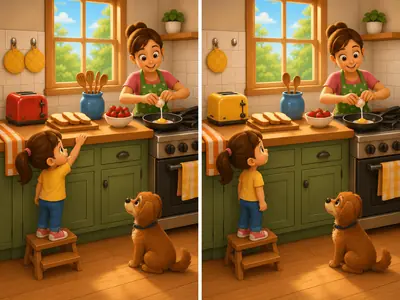 5 differences
 5 differences
 5 differences
Spot the Differences for Kids: Observation and Attention to Detail
Compare both pictures calmly and tap the differences.
Finding the differences between two almost-identical pictures is a classic kids' puzzle, now on screen and free. The child compares both scenes patiently, looks for small changes (a different color, an object added or removed, a subtly modified shape) and marks them with a tap. A simple-looking activity that trains observation, sustained focus and attention to detail like few others.
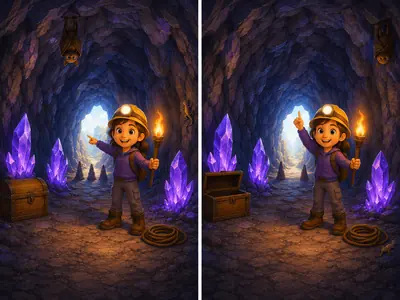
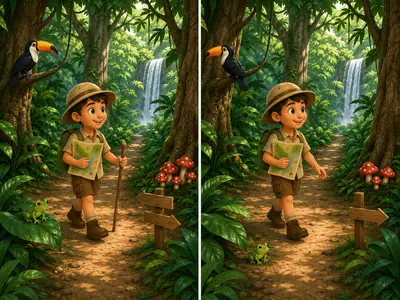
Every scene has its own number of differences to find. The pictures are drawn in a kid-friendly style (bakery, fruit shop, garden, space, harbor, library, kitchen, cave, tropical jungle) and the count varies based on complexity.
What do kids learn by spotting differences?
- Visual attention and careful observation as children compare two nearly identical scenes side by side
- Sustained focus throughout the whole hunt for differences across all 9 themes (bakery, fruit shop, space, garden, harbor, library, kitchen, cave and tropical jungle)
- Visual comparison and analysis between two images to spot what changed in color, size or position
- Patience and persistence, since there is no time limit and the child searches at their own pace
- Eye-hand coordination as children tap precisely on each difference they find
Each scene is completed by finding all the differences. If you tap a spot without a difference, a soft sound plays and you can keep looking.
Frequently asked questions about Spot the Difference
What age is the spot the differences game good for?
The spot the differences game works from age 4, with a grown-up helping out at first. Around that age children start to hold their visual attention long enough to compare two pictures and find tiny differences. For older kids, ages 6 to 8, the game turns into a real test of observation and visual memory.
How do you play the spot the differences game?
In the spot the differences game you see two pictures side by side that look the same but actually have differences: things that appear in one and not the other, things that changed color or size, or things that moved. The child has to find them all by tapping or clicking on each one.
How many differences are there in each scene of the spot the differences game?
The number of differences varies from scene to scene: some have just a few and others have more, which adds to the challenge and keeps things interesting. The exact number for each scene shows up in the game counter so the child always knows how many are left to find.
Do you need to know how to read to play the spot the differences game?
The spot the differences game needs no reading at all, because it is 100% visual. There is no text to read during play: just two pictures to compare and a counter showing how many differences the child has found. That makes it accessible for kids who can't read yet or who are just starting to learn.
Spot the differences is one of the 11 logic games on Little Kids Games.