Shapes
✨ 🔶Pick a scene to start
 4 shapes
 5 shapes
 5 shapes
 5 shapes
 5 shapes
 6 shapes
 6 shapes
 6 shapes
 6 shapes
 6 shapes
 6 shapes
 6 shapes
 6 shapes
 7 shapes
 8 shapes
 8 shapes
Find Geometric Shapes for Kids: Recognize Squares, Triangles and Circles
Look at the scene, find the shapes and tap them. Discover them all to move on to the next!
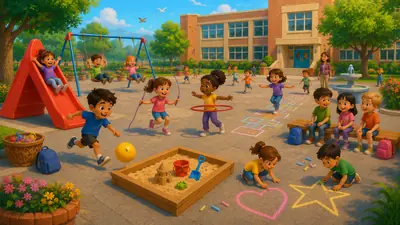
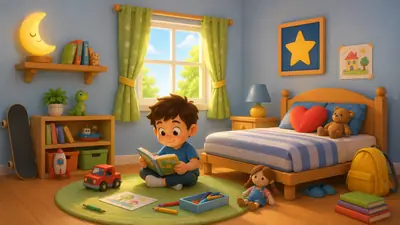
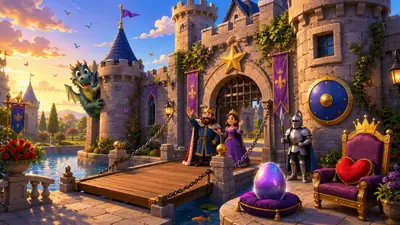
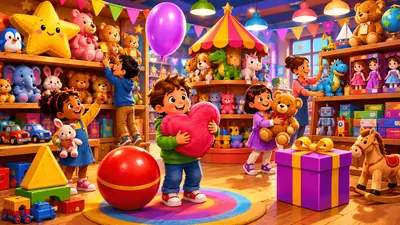
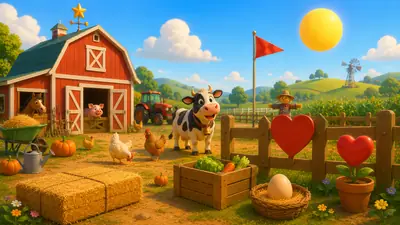
Shape-finding is a classic early-childhood education activity: the child explores an illustrated scene and recognizes basic geometric figures hidden in the drawing's elements. A triangular roof, a square window, a round sun, a heart on a sweater. This activity reinforces visual shape recognition, geometric vocabulary and attention to detail.
Each scene has several shapes hidden to find. The more trained the child's eye, the faster they will discover them. Scenes combine easy shapes (circles, squares) with more complex ones (heart, star, crescent) to accompany shape recognition development from ages 3 through 7.
What do kids learn by finding shapes?
- Recognition of the 9 basic geometric shapes from the early-childhood curriculum: square, rectangle, triangle, circle, oval, heart, star, diamond and crescent moon
- Geometric vocabulary: the child links the name to the shape in real objects (a square window, a round wheel)
- Visual attention and an eye for detail while hunting for 3 to 8 hidden shapes in each scene
- Hand-eye coordination from tapping precisely on each shape in the picture
- Patience and persistence, since every scene can be replayed as many times as the child likes with no time limit
Each scene is completed by finding all shapes. No time limit or pressure: the child explores at their own pace and celebrates each correct find. Free, no signup, in 4 languages.
Frequently asked questions about shape-finding
What age is the shape-finding game suitable for?
The shape-finding game works from age 3, with scenes built around simple, clearly visible figures like big circles and bold squares. At that age children are just beginning to name the basic geometric shapes, and the game helps them link the name to the shape in a real context (a square window, a round ball). By ages 4 to 5 they can spot more complex shapes such as triangles, hearts and stars. From age 6 the challenge ramps up with subtler shapes like diamonds, ovals and crescent moons woven into the details of the drawing. Every scene can be replayed as many times as the child likes to reinforce the learning without frustration.
How do you play the shape-finding game?
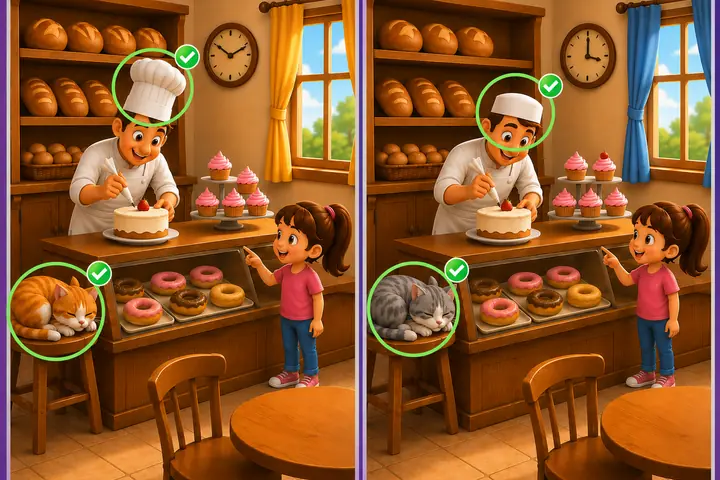
In the shape-finding game, the shapes to find appear at the top of each scene, each with its name and a colored symbol. The child looks at the picture and taps the spot where they see each hidden shape. On a correct tap, that shape gets marked with a green check and is crossed off the list at the top. If they tap a spot with no shape, a soft error sound plays, with no penalty or discouraging message, and they can keep trying. Once all the shapes in the scene are found, they win it and move on to the next one. There is no time limit or score: the child sets the pace.
Which geometric shapes appear in the game?
The shape-finding game includes the 9 basic figures that cover the early-childhood education curriculum: square, rectangle, triangle, circle, oval, heart, star, diamond and crescent moon. Each scene combines between 3 and 8 shapes, blended naturally into the drawing (a triangle on the house roof, a circle in the car wheel, a heart on the child's sweater). This visual integration helps the child not just memorize the shape in isolation, but recognize it in real-world objects, a key skill for geometry and later spatial reasoning.
Does the child need to be able to read to play the shape-finding game?
The shape-finding game does not require reading. Each shape to find appears with a colored visual symbol (a blue square, a red heart, a yellow star) alongside the written name, so pre-reading children recognize them by their outline and color. A friendly voice also reads the game's instructions at the start to guide the youngest players. The feedback is 100% visual and audio, not written: a green check appears over the found shape and a positive sound confirms the hit. It is ideal for 3- and 4-year-olds who do not read yet but are already ready to start recognizing figures.
Find the shapes is one of the 6 shape games on Little Kids Games.