
Coloring books
Downloadable PDFs with 50 drawings. Print at home.
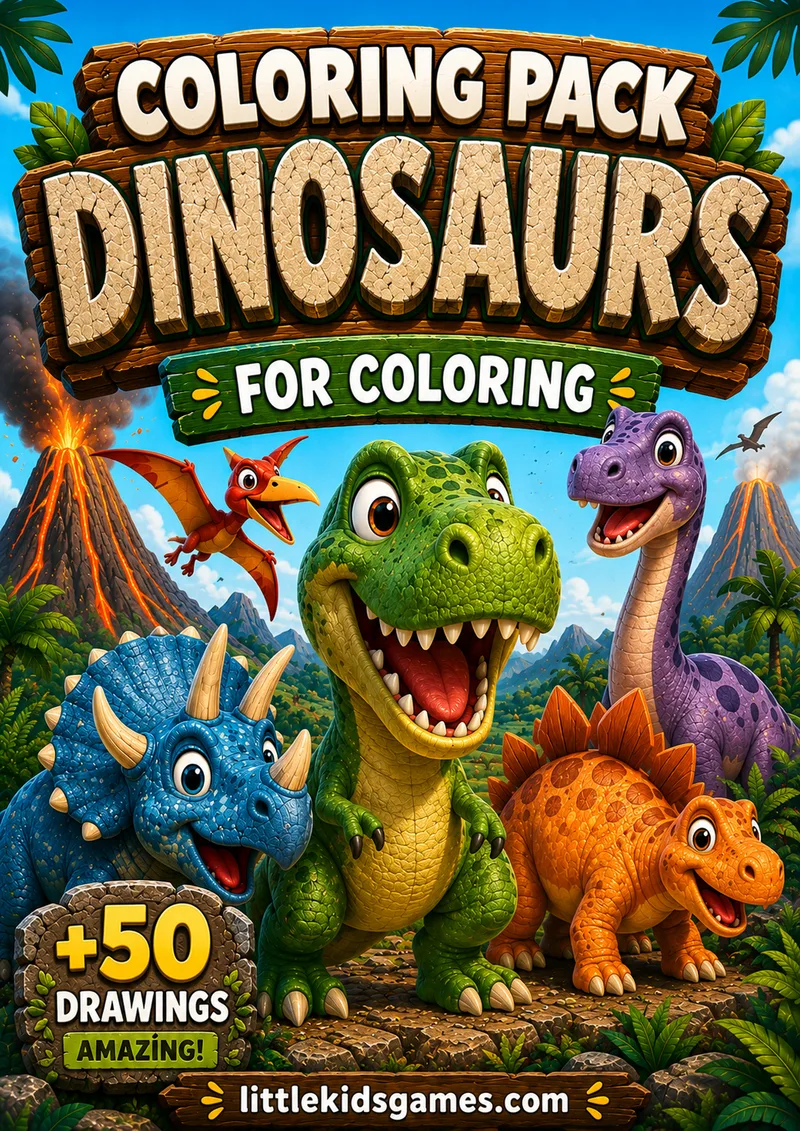
My Dinosaur Coloring Book
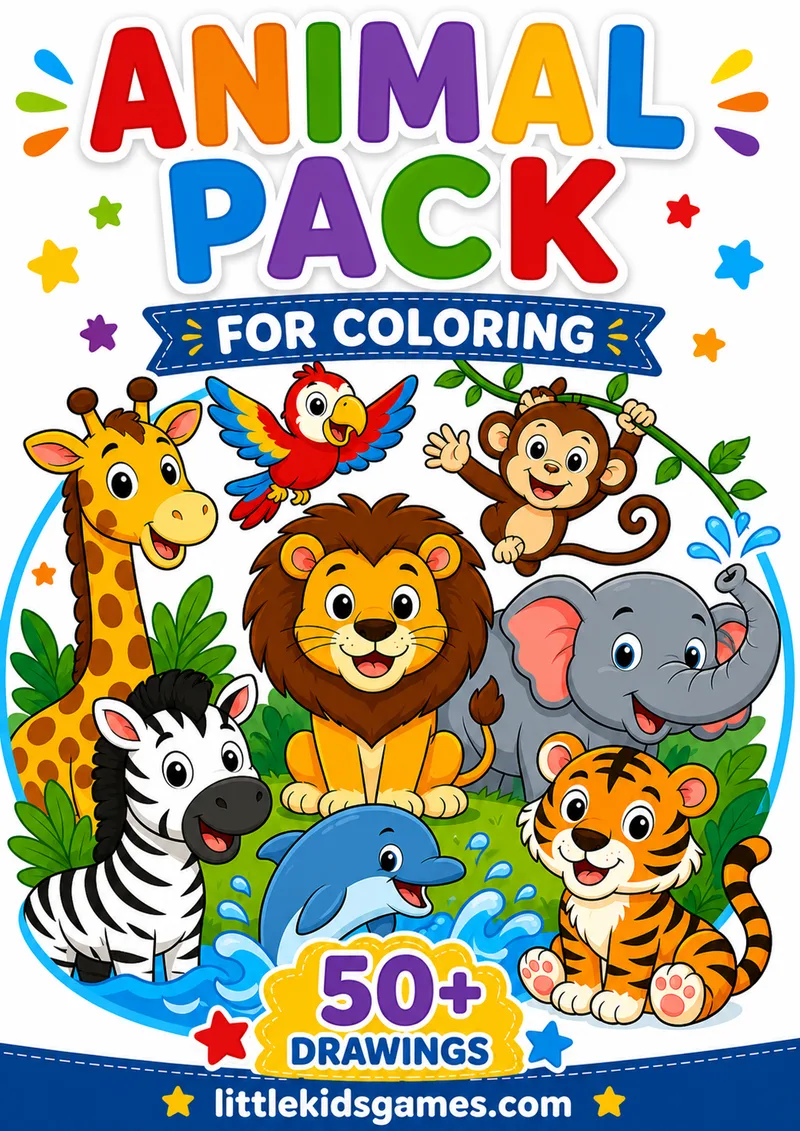
My Animal Coloring Book
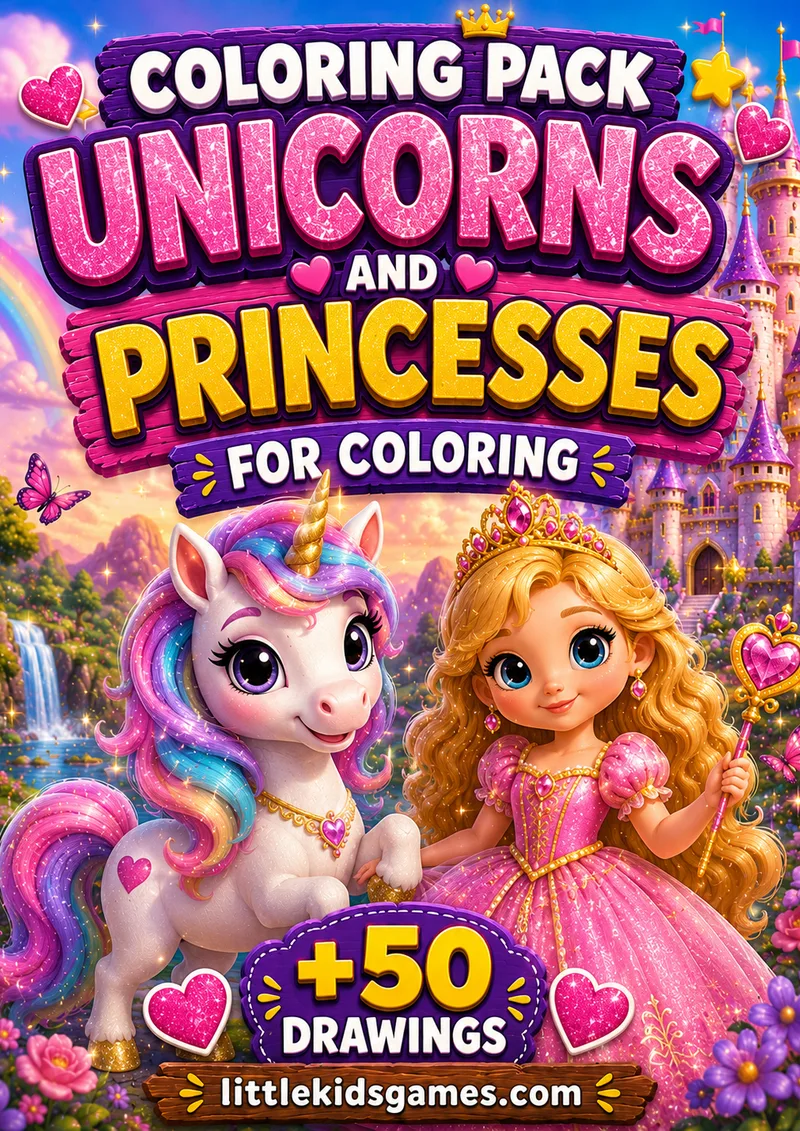
My Princess and Unicorn Coloring Book
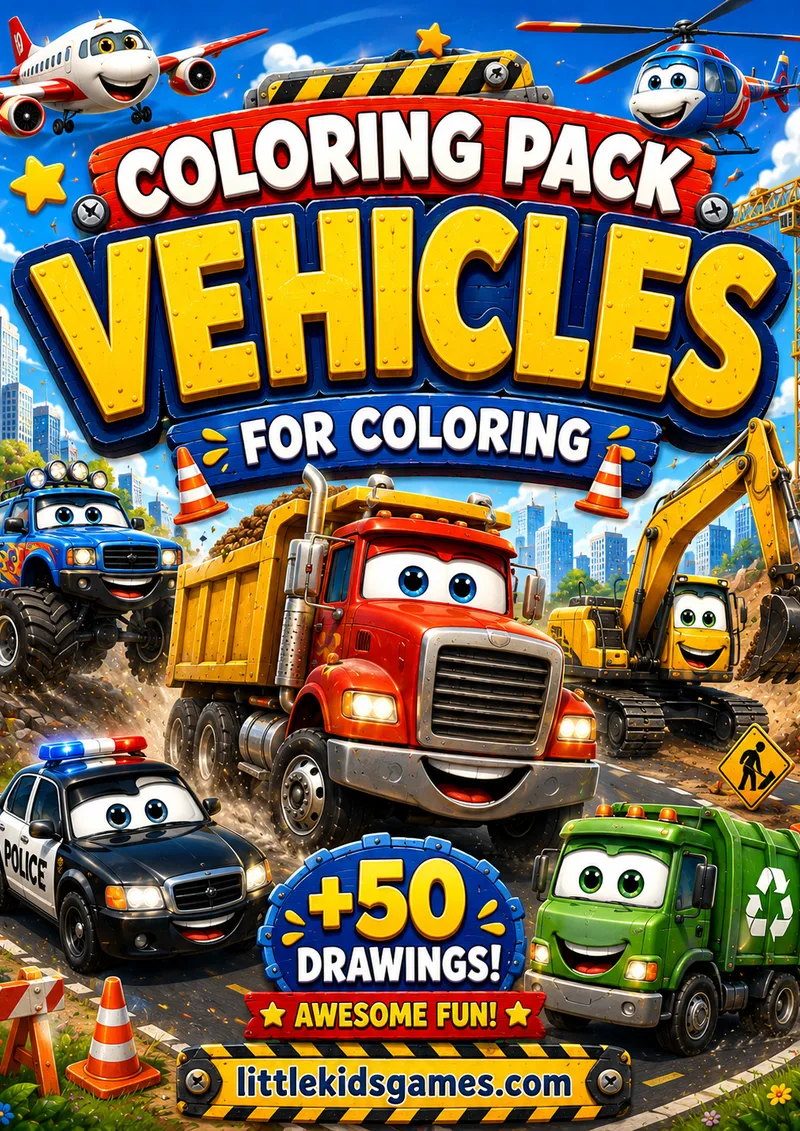
My Vehicle Coloring Book
What coloring books do we offer?
Each of these books is a 50-page A4 PDF ready to print, designed for kids ages 2 and up. The lines are thick, the shapes are big, and the scenes vary: there are simpler pages for the smallest ones still learning to hold a crayon, and others with more detail for kids who already color within the lines.
Topics also rotate within each book. The animal book ranges from a lion with a huge mane to a hummingbird among flowers; the dinosaur book mixes well-known carnivores with massive sauropods and herd scenes. The idea is that kids can pick depending on the day and mood, without exhausting the variety in two sittings.
Why a downloadable book and not just loose drawings?
A book has continuity. The 50 pages share style, line weight, and proportion, so when the child moves from one to another there's no jump in quality or tone. That builds a visual routine that helps focus: by the fifth page they don't need to reorient, they just keep going.
Plus, downloading the PDF means the material is yours forever. It doesn't depend on internet, it doesn't get lost, and you can print it as many times as you want. A crumpled sheet or a coloring that didn't go well isn't a problem: print another one. That lowers the pressure and lets kids experiment freely.
How can you use the PDF at home or in the classroom?
The standard A4 format works on any home printer without adjustments. Some ways to use it:
- Print only the child's favorite pages — you don't need the whole book.
- Take it to the classroom as a ready-made resource: 50 drawings for an art class or rainy day.
- Print double-sided and staple a home booklet.
- Laminate the most-used pages and paint them with dry-erase markers (reusable).
- Combine books for themed mini-fairs: animals + dinosaurs for a zoo afternoon, vehicles + city for a transport day.
What age is ideal for each book?
All four books in the collection share the same principle: thick lines, large shapes and progressive difficulty within the same PDF. That means they grow with the child for several years. For toddlers (2-3 years) the first pages are ideal: large figures with few details, perfect to fill with flat colors without worrying about staying inside the lines.
Between 4 and 5 years, kids start to enjoy pages with more elements: combinations of characters, backgrounds with plants or clouds, scenes with two or three figures interacting. At this age they can already pick color palettes with intent (an orange lion, a green crocodile) and apply more pressure and control with crayons or markers.
Ages 6 to 8 reach the most detailed pages: full scenes with multiple characters, decorative patterns, mandalas and compositions with more small areas to color. This range also enjoys combining techniques: watercolors in one zone, markers in another, pencils for details. The same page can be painted completely differently by a 4-year-old and a 7-year-old.
What does coloring develop in early childhood?
Coloring isn't just entertainment. It's one of the few activities that combines fine motor skills, sustained attention, visual planning and emotional expression at the same time. The action of holding a crayon and guiding it between narrow lines directly works the pencil grip, a skill that later transfers to writing. That's why occupational therapists recommend coloring frequently between ages 3 and 6, right before the literacy stage.
Also, choosing colors and deciding where to apply them is an early form of planning. The child has to think before acting: paint the background first or the figures, use red for the sun or for a flower, leave white as a highlight. That anticipated mental sequence is the foundation of more complex executive functions later applied in math and reading.
Finally, there's an emotional component that's often underestimated. Coloring for 15-20 minutes lowers heart rate and cortical activation, similar to guided meditation for adults. That's why many schools use coloring sheets as a transition between high-energy activities and moments of focus. At home it works the same: one page from a downloaded book can be the bridge between active play and meal or bedtime.