Puzzles for Kids Online: Educational Jigsaw Games That Build Concentration
Tap two pieces to swap them. When every piece is in place, you've solved it!
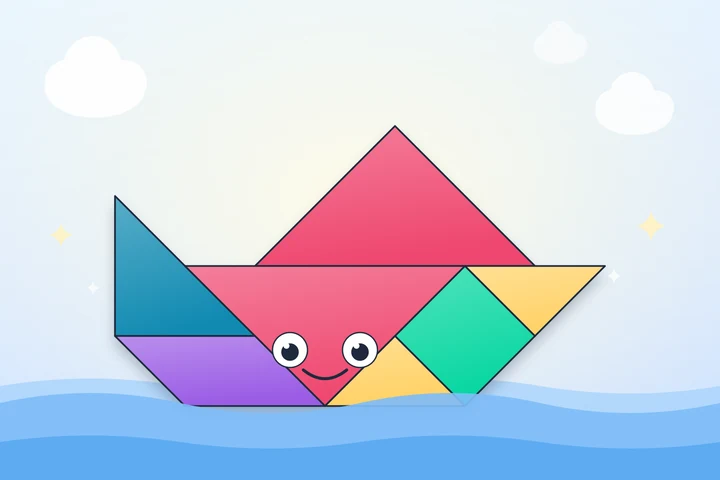
Puzzles are a classic and always effective activity for children's cognitive development. At Little Kids Games, puzzles are designed especially for children ages 2 to 8, with colorful and attractive images that hold the attention of the youngest kids. The game is simple and intuitive: the pieces appear on the board already mixed up, and the child taps two pieces to swap their positions until the picture comes together. No tiny pieces falling on the floor or getting lost under the couch — perfect for the youngest players. When children finish, they experience a sense of achievement that boosts their self-confidence.
Three difficulty levels to suit every age: Easy with 4 pieces in a 2×2 grid, perfect for toddlers ages 2 to 3 taking their first steps with puzzles; Medium with 9 pieces in a 3×3 grid for children ages 4 to 5; and Hard with 16 pieces in a 4×4 grid for older kids seeking a real challenge.
What do kids learn from puzzles?
- Concentration and sustained attention while assembling the 4, 9, or 16 pieces of each level
- Visual perception and recognition of shapes and colors as kids work out where each piece fits
- Hand-eye coordination through the swap mechanic (tap one piece, then another)
- Patience and frustration tolerance, with no timer and no penalties
- Spatial thinking and problem-solving as kids picture how the whole image comes together
Completely free and with no need to register or download any app. Works on any device: phone, tablet, or computer. This adapted version of the classic puzzle was designed for the youngest kids: no pieces falling on the floor or getting lost under the couch — all the visual challenge of a traditional puzzle adapted to the screen. Every time a puzzle is completed, the satisfaction the child feels builds their confidence and motivates them to try the next level.
Frequently asked questions about jigsaw puzzles for kids
How does the puzzle work?
The puzzle starts with the pieces already laid out on the board but shuffled into random spots, ready to be reordered. The child taps one piece and then another to swap their positions, a swap-tile format that's easier for little hands than traditional drag-and-drop. Once every piece is in the right place, the full picture appears and a celebration sound confirms the win. It's a format built for the youngest players: there are no tiny pieces to drop on the floor or lose under the couch. It works the same with a tap on a touchscreen or a click with a mouse, and each puzzle's progress is saved automatically.
How many pieces does each puzzle level have?
The puzzle offers 3 difficulty levels designed to follow a child's cognitive development: Easy, with 4 pieces in a 2×2 grid, ideal for kids aged 2 to 3 who are just starting to grasp the idea of parts and wholes; Medium, with 9 pieces in a 3×3 grid, for ages 4 to 5 when they can mentally picture how more complex shapes fit together; and Hard, with 16 pieces in a 4×4 grid, recommended from age 6 when a child can plan moves and stay focused for several minutes. Each level is calibrated to avoid frustration and unlocks naturally once the child masters the previous one.
At what age do children start with the puzzle?
The 4-piece puzzles are suitable from age 2, when children are just learning to recognize shapes and to connect parts with a whole. A child moves up to the 9-piece level once they can complete the 4-piece one without help, usually between ages 4 and 5. The 16-piece level works well from age 6 onward. This way, the same puzzle grows with the child across several years of development.
What does a child learn by doing the puzzle?
Working on the puzzle helps a child develop hand-eye coordination, visual perception, short-term memory, patience, and the ability to concentrate. The puzzle also trains problem-solving: the child learns to try, get it wrong, and correct course. It's one of the activities with the best effort-to-benefit ratio for the early cognitive development of children aged 2 to 8.